Why buyers ask for this
Official robot makers commonly position machine tending around repetitive loading/unloading, CNC tending, press tending, and keeping machines utilized without tying skilled workers to the door of a single machine.
Machine tending is one of the clearest robot-arm sourcing paths: the buyer can describe the machine, part weight, door/fixture geometry, cycle target, and shift pattern. RoboticsInquiry turns that into a shortlist for six-axis arms, cobots, grippers, controllers, and safety accessories from China.
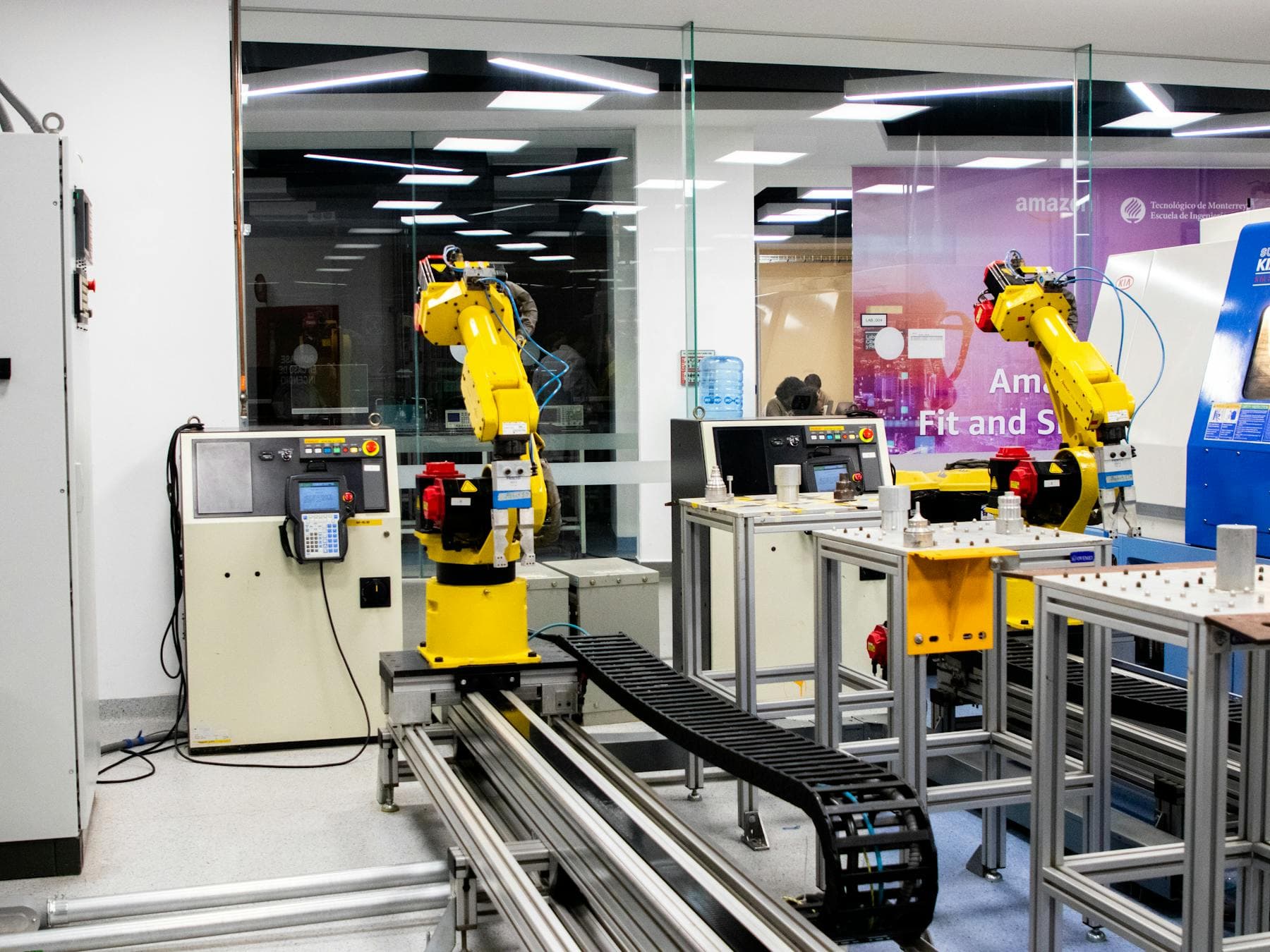
Official robot makers commonly position machine tending around repetitive loading/unloading, CNC tending, press tending, and keeping machines utilized without tying skilled workers to the door of a single machine.
The quote quality depends on details that are often missing in the first message: part mass including gripper margin, door stroke, fixture location, machine interface, coolant/chip environment, and whether the robot must share space with operators.
China suppliers can be useful when the buyer needs cost-effective arms, grippers, pedestals, controller cabinets, safety components, and prototype samples. RoboticsInquiry should not promise turnkey local integration unless a qualified partner is involved.
A useful inquiry does not need to be perfect. It should give enough context to filter unsuitable robots before suppliers spend time quoting.
Start from payload, reach, speed, safety boundary, and machine access. Cobots can reduce guarding complexity in some shared-space jobs, while industrial arms are often better for higher speed or harsher environments.
Part weight, reach/layout, machine type, cycle target, gripper needs, country, budget, and timeline are enough to begin a first shortlist.
Page content is organized from public market signals, official robot application pages, and source material listed below. We paraphrase and adapt it into a buyer RFQ workflow instead of copying claims.
Send the details you already know. The sourcing desk can clarify missing payload, reach, torque, protocol, tooling, and timeline details before supplier matching.